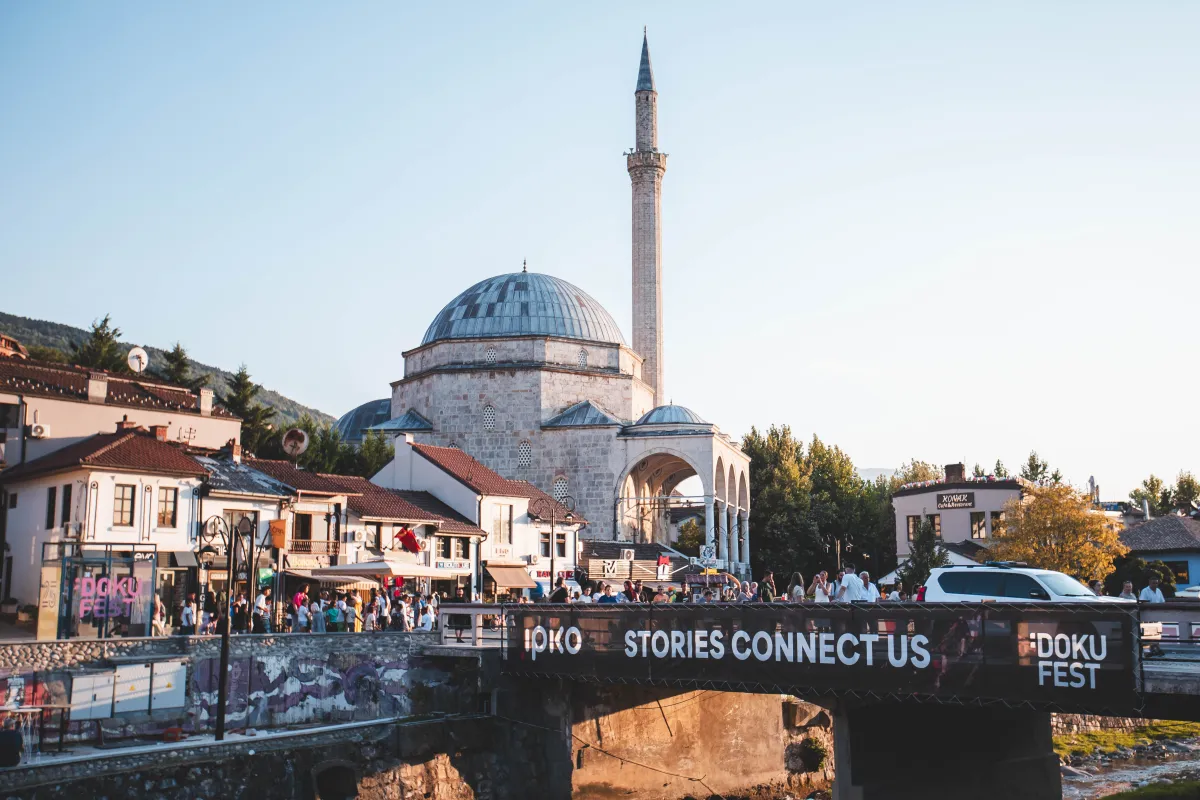


The manifesto of this year’s DokuFest, marking its 25th anniversary, focused on “persistent defiance,” urging—maybe even daring—us not to look away. This political-mixed-with-punk spirit has endured for the festival’s history, which is always trying something new, celebrating something old, and staying open to everything. The festival has been transformational, both as a cultural touchstone and for the city of Prizren, Kosovo, it calls home.
Back in 2002, when DokuFest was born, there were no cinemas in Prizren. The Lumbardhi Cinema (which would later play a big role in the festival) was no longer operational, and there were no other venues at which to watch films. The founding team—co-architects and co-curators Eroll Bilibani, Samir Karahoda, and Veton Nurkollari—decided that Prizren needed cinemas and film, and held the first DokuFest with a handful of VHS screenings in the Lumbardhi space, opened solely for the festival. Over the years, the program has expanded to a full slate of international, regional, and national documentary films, international fiction shorts, filmmaker retrospectives, and a variety of other special series and expanded offerings.
Despite the shadow of the wars that lasted until 2001 across this region of former Yugoslavia, DokuFest grapples with that legacy and memory, not ignoring the past, but embracing a future of free expression and new possibilities. From those first few scrappy, small years, the festival has grown—influencing festivals across the Western Balkans and garnering attention and collaboration from international festivals and partners. More than extending outward, its importance lies in what the festival has developed for the local community.
Until this year, it was extremely difficult for Kosovars to obtain visas to destinations such as Europe and beyond. “If young people can’t see the world, then we had to bring it here for them,” says Nurkollari during a conversation with Documentary at the festival. “Cinema is not a luxury,” he attests. “It’s not roses, it’s bread.”
Cinema is a witness, an education, a catalyst for social change, and festivals are the foundation for imagining the future.
The festival opened a door to learn of new things and look outward, while prizing Kosovar strengths and nurturing a new generation of thinkers and makers. Bilibani runs a wide range of filmmaker development and youth film initiatives, including one called “Storytelling for Trust-Building and Reconciliation.” If there is a legacy they would like to leave, it is in building the next generation of storytellers who will challenge the norms and speak their truths artistically.
The festival’s mantra of resistance applies not only to the subjects of many of its programmed films but also to resistance as communing, bearing witness to films together, and unpacking conversations throughout the day (and late into the evening over rakia or beer at the local festival gathering spaces).
Industry heavy hitters and invited jury members from all over the world drink next to mid-career filmmakers and first-time makers alike. The small-town setting, easy-to-attend screenings, and lack of a formal industry program definitely help strip the festival model down to an accessible encounter. But it’s the warm energy, love, lack of pretention, and space for connection that leave a lasting impression on those who come (and return). DokuFest has the vibe of a punk family reunion. And once you come, you are part of that family. That intimate atmosphere is what keeps people coming back, and they are careful not to scale too much and damage the spirit that people expect.
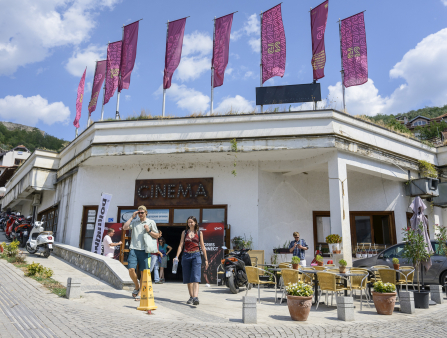
DokuKino Cinema in Prizren, Kosovo. Photo credit: Suer Celina.
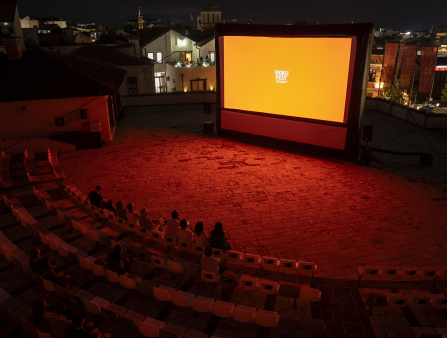
Lumbardhi outdoor cinema in Prizren, Kosovo. Photo credit: Ferdi Limani. Courtesy of the photographer
The festival’s program encompasses everything from film screenings, talks, and master classes to live performances and music nights. There’s less interest here in documentary as an industrial endeavor than as a creative exploration.
DokuFest doesn’t really care about premieres, and many of the films they screen have played both big and small festivals. The festival’s goal, after all, is foremost to bring quality films to the local audience so they can be in conversation with each other and with the community.
Aside from competition programs (including international, Balkan, and Kosovo documentary features and shorts), there are thematic programs and a featured filmmaker collection (this year for English filmmaker Sophie Fiennes). In addition, there’s an official Fiction/Nonfiction program, but also a healthy dose of hybridity scattered throughout the competition sections, examples of creation informed by documentary practices and methodologies.
Take London (International Competition) by Sebastian Brameshuber, whose most recent feature, Movements of a Nearby Mountain, showed at DokuFest 2019. The film sits in a car with Bobby as he drives a diverse group of passengers back and forth between Salzburg and Vienna, stories becoming conversations becoming connections. A car is a good place for a confessional, and Bobby’s thoughtful, calm demeanor seems to draw heartfelt testimonies.
During the first ride, as you try to figure out how the camera is literally in the driver’s seat, you start to wonder what is real. And if Bobby looks familiar, it’s probably from his museum-guard turn in the also-hybrid film Museum Hours (dir. Jem Cohen, 2013). As in that film, the fictionalized holds the real. Brameshuber selected riders based on their personalities and real-life stories (even Cliff, the protagonist of Movements, appears as himself). Despite the constructed conceit, the film is still essentially strangers meeting and engaging in a car, allowing conversations to unfold naturally. The result is a simple yet rich few hours of conversations born of reality, exploring work, identity, love, fears, and futures that capture the fabric of everyday life itself.
Sabine Groenewegen’s The Clearing, which won the Human Rights Dox competition, blends historical artifacts with speculative testimonies into a layered exploration of Indonesian women’s and workers’ rights on early-20th-century Dutch colonial rubber plantations in Sumatra, Indonesia. Prompted by an actress who bore a resemblance to her grandmother in the 1936 Dutch film Rubber (dirs. Johan De Meester and Gerard Rutten), Groenewegen begins a journey that investigates the film’s missing clips, which reveal the concept of nyai (local Indigenous housekeepers who also serve as concubines), and follows the path to a history of systemic racism, sexism, and exploitation.
Here, archives reimagine and rework history; edited together, they track not only the facts but also the connections between the state, nature, health, and prosperity. Texts lifted from various books and historical sources become the imagined storytelling of those who bore witness and fought for their rights. A feminist language invented in the 1980s, incorporated into the narrative, captures the essence of the collective experience of decades before.
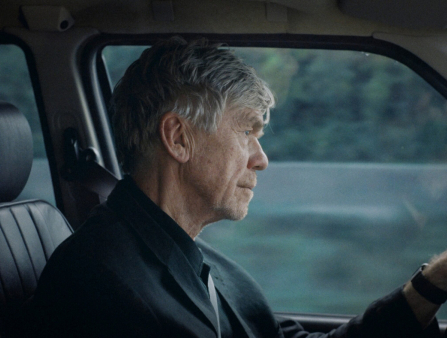
London.
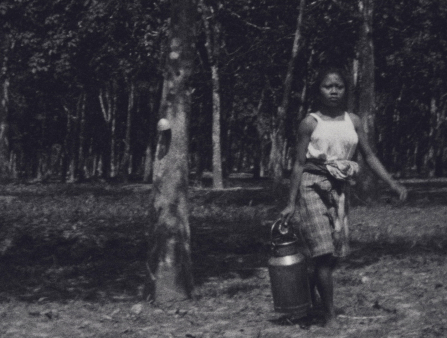
The Clearing.
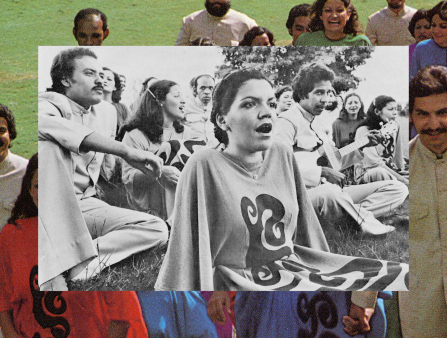
An Incomplete Calendar.
Archives play a similar role in many films across the DokuFest program, from the creatively didactic An Incomplete Calendar (dir. Sanaz Sohrabi), a layered reassemblage of stamps and songs into a history of oil and regimes, to A State Film (dir. Roland Sejko), a visually mesmerizing story of communist Albania constructed from propaganda images and the personal archives of Enver Hoxha, its communist autocrat for 41 years.
In As the Spring Arrives, Water Recalls the Nomads, which won the Balkan DOX competition, archival materials help weave an ethnographic, anthropological journey through parallel presents and pasts. The film begins with researcher and director Dilşad Aladağ following shepherds through the mountains of southern Turkey to forage an herb for tea, walking the paths of their nomadic Yörük ancestors. Slow scenes of landscape and the distant bodies of the director and the shepherds (and children) give way to a German anthropologist’s mid-1950s writings and images of nomads in the same place, the film putting Aladağ in conversation with a fellow researcher long gone.
Watching the film in the over 90°F heat of Prizren, against the contemporary crisis of burning land across Europe, makes the film’s meditation on the loss of water and pastoralism in the face of modernity and development all the more timely.
Xisi Sofia Ye Chen’s From Dawn to Dawn, which won the International Competition, explores identity and belonging in Spain’s Chinese diaspora. She turns the focus on her brother, A Wen, and his struggles to balance his criminal past, his family and business responsibilities, and his desire for moral clarity. We first see this soft-spoken man at a Buddhist retreat in China, where he is exploring his spiritual side, but Ye Chen slowly introduces new layers of her brother’s story through intimate vérité scenes and her steady, poetic voiceover recounting their memories. He was once a gangster, mirroring the Chinese films they watched together as kids.
Ye Chen weaves together takes of A Wen’s daily life with long discussions on depression amongst the former mafia crew, personal discussions between mothers about their children and regrets, and many smoke-filled nights at the karaoke club the crew always returns to. The result is a portrait of silence, limbo, and reconciliation that would be familiar to many living away from home.
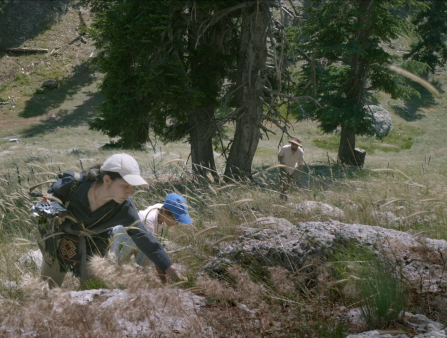
As the Spring Arrives, Water Recalls the Nomads.
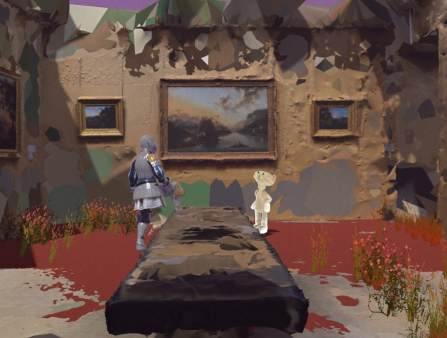
Normal Planet.
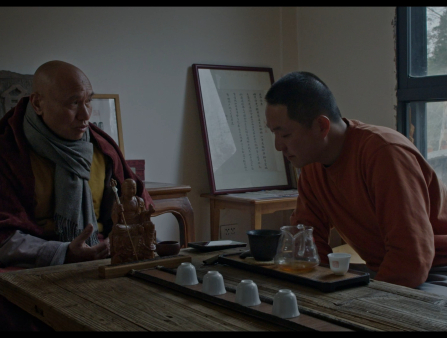
From Dawn to Dawn.
DokuFest also dedicates a lot of screen time to its slate of quality short documentaries. These run the gamut from the hauntingly personal portrait of her aunt in Karla Condado’s Miriam and the film’s exploration of femicide in Mexico, to the playful sociological commentary on the only Afghan man in space in Elham Ehsas’s Forgotten Spaceman; from Bill Morrison’s literally in-your-face, tense recap of a contemporary domestic standoff in the U.S. (Sawyer Avenue, Sunday Afternoon), to a dream of birds long-disappeared from the native land where now stands a congested, steel-and-concrete city in Iris Sang’s magical realist Singing of the Evening Stars. The prize went to Ekiem Barbier, Guilhem Causse, and Quentin L’helgoualc’h’s Normal Planet, an animated journey through an art museum that seems like it was filmed in VRChat, but the wacky avatars’ conversations were actually crafted from recorded conversations in a Montpelier museum that reflect on art, consumption, and contemporary life.
The spirit of DokuFest was perhaps best reflected by filmmaker and film historian Mark Cousins, who was invited to the festival to showcase two episodes of his new series, The Story of Documentary Film, which traces nonfiction film and how it shaped—and was shaped by—the world around us. In his visual conversation tracing his discovery of documentary film and its history, he stated, “A film festival is a defense against fascism” (a sentiment echoed on his now infamous T-shirt), to which the moderator Iris Elezi, director of the Albanian Cinematheque, responded, “A film festival is a defense against ignorance.”
In that vein, DokuFest has also succeeded in being a defense against indifference, with enough legacy and substance to sustain its persistence. Attendees have the deepest respect for what the team has built here. At 25 years, DokuFest has delivered a festival that gives its audience care and challenge in equal parts.
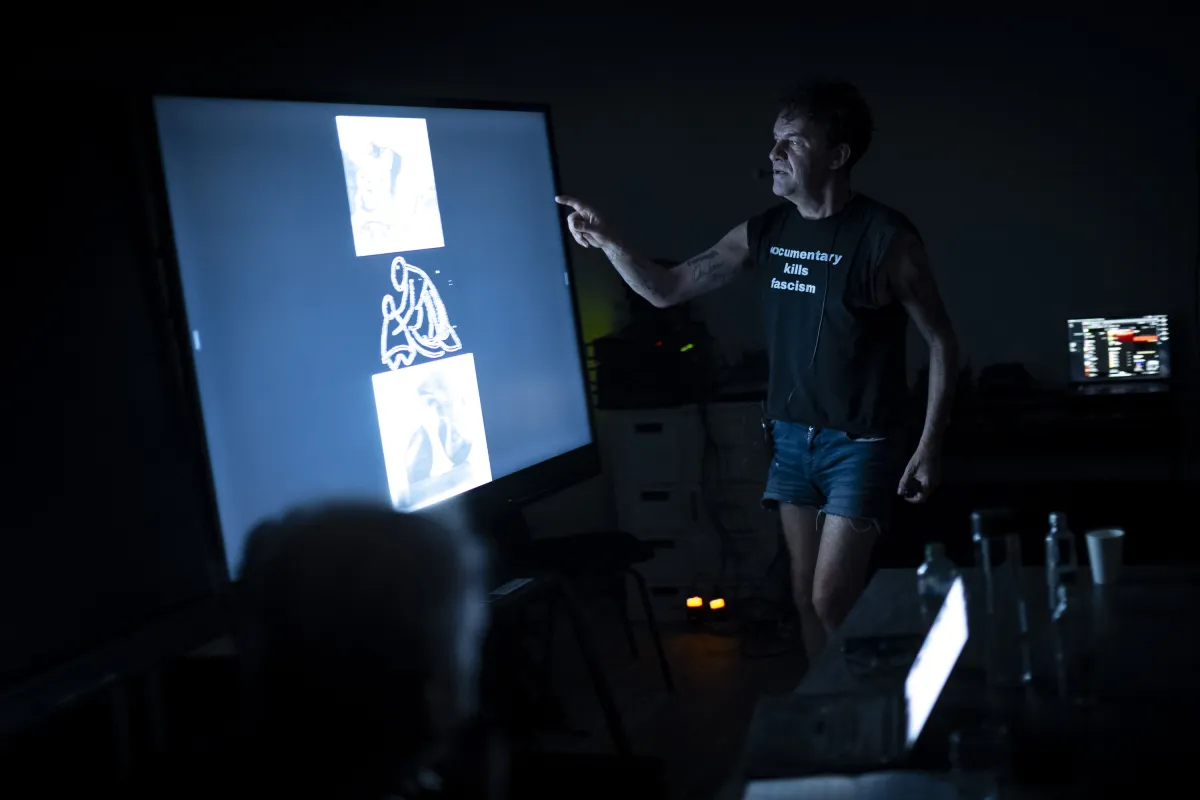
Mark Cousins presents The Story of Documentary Film. Photo by Ferdi Limani. Courtesy of the photographer
This piece was first published in Documentary’s Fall 2026 issue.