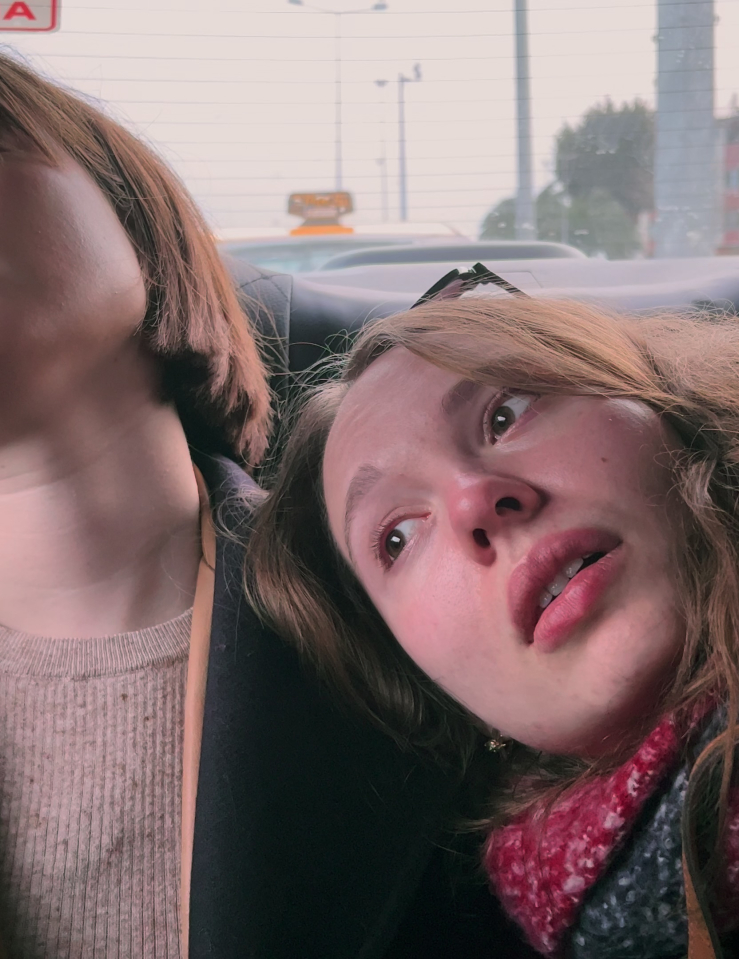


When Gianluca Matarrese talks about his work in the documentary space, he smirks any time we discuss concepts like “truth” or “real.” The Paris-based Italian filmmaker knows not to put too much stock in such ideas, especially because, by his own admission, he’s looking to reveal them as self-conscious fabrications. With a background in theater and television, Matarrese is not shy about billing himself as a master contriver of situations. “I knew how to make things happen,” he says of his years working in reality TV. He calls it his superpower—the uncanny ability to get folks on camera to behave precisely as he wants them to; or, as he insists, to get them to say and do what he always knew they would. With a style that deftly straddles the line between obfuscating such antics and making them glaringly obvious, Matarrese’s films are gleefully wry provocations.
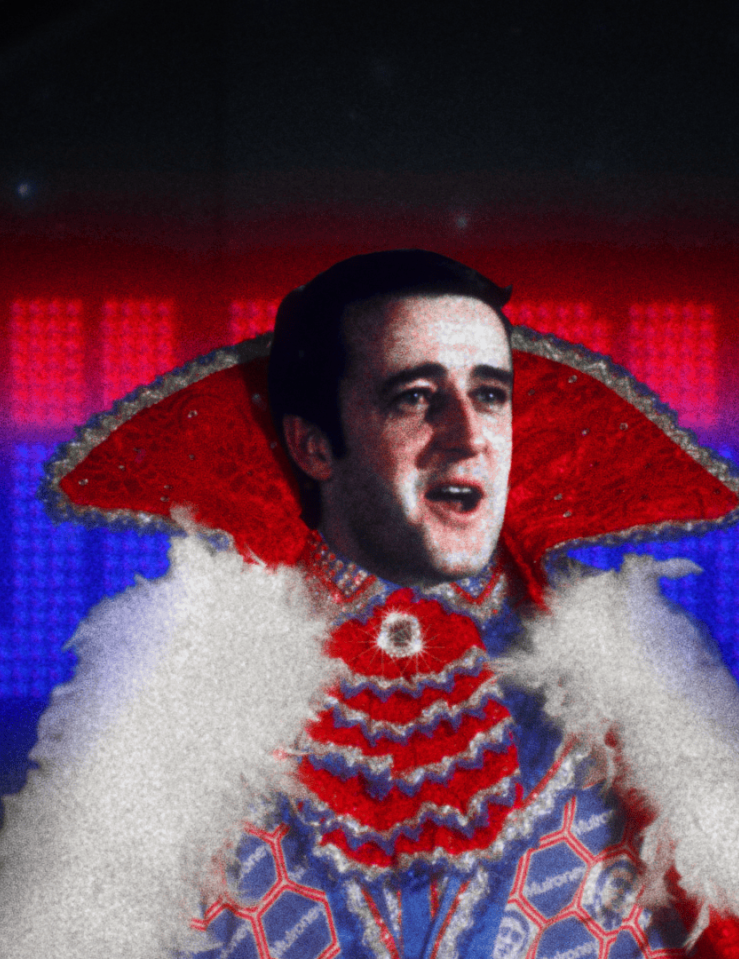
In 2025, Matarrese unveiled two new feature documentaries that serve as twinned complementary halves of his filmmaking sensibility. At Sundance, he introduced GEN_, an observational doc focused on Dr. Maurizio Bini. Placing his camera inside Dr. Bini’s office at the Niguarda public hospital in Milan, Matarrese presents viewers with an affable doctor just as happy to help out a couple seeking fertility treatment as to counsel a young trans man starting testosterone therapy. A newsy, voiceover intro about anti-trans sentiments worldwide notwithstanding, the film keeps its focus squarely on those intimate, often private conversations between Dr. Bini and his many patients. It’s in the accumulation of all those interactions that GEN_, whose title playfully calls up and sutures together concepts like gender, genes, genealogy, and genitals, offers a thesis about hormones and humans that’s as much rooted in science as in empathy.
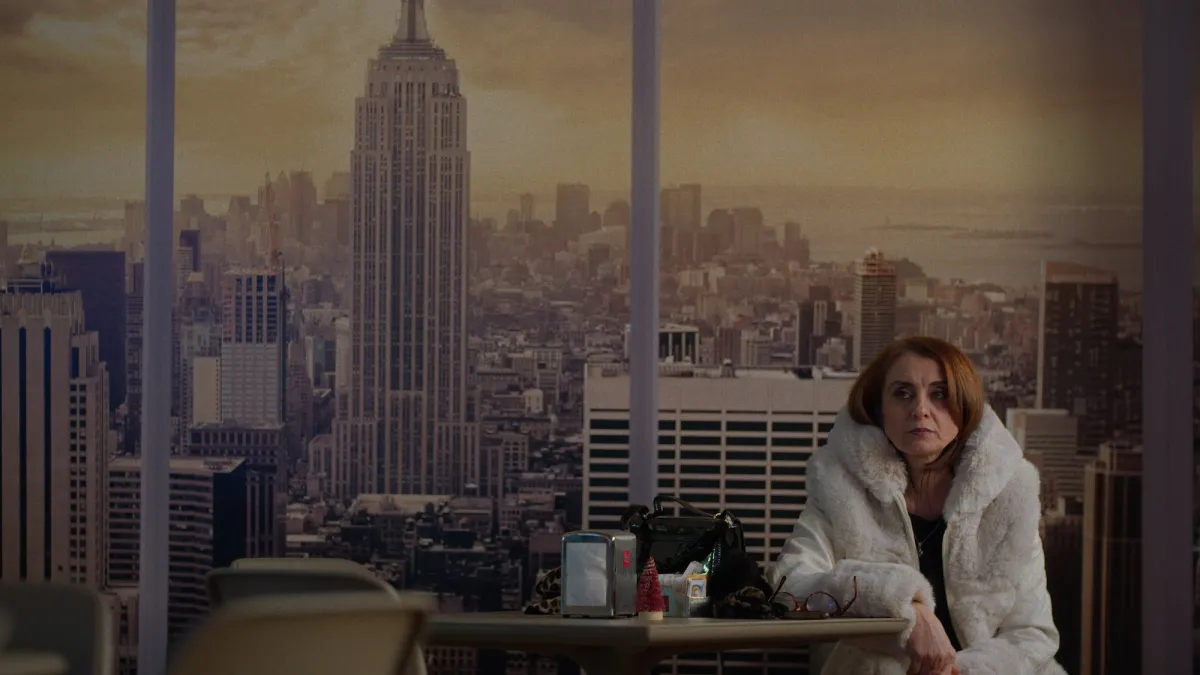
In contrast, his most recent feature, I Want Her Dead, which premiered at Venice Days, exists on a completely different register. Turning the focus back on his family (as he’d done in his feature doc debut, 2019’s Everything Must Go), Matarrese captures a long-running feud between two of his relatives, Louisa and Imma, that feels ripped straight out of an outsized Italian tragicomedy. Set during the holidays as his own mother and aunts try to get his cousins to reconcile (lest their increasingly violent altercations get the better of them), I Want Her Dead feels like a highly dramatic episode of a reality TV show that becomes, by its final shot, a rather melancholy portrait of loneliness and alienation.
Documentary caught up with Matarrese to discuss his latest projects and his filmmaking philosophy. In the following conversation, Matarrese breaks down how his experience in the theater and reality television has shaped his approach as a documentarian, why intimate conversations are his de facto mode of storytelling, and why he still feels like an actor even when he’s behind the camera. This interview has been edited.
DOCUMENTARY: These two documentaries, GEN_ and I Want Her Dead, feel, on the surface, very different. However, what connects them is an emphasis on intimacy, which runs through your work. How do they relate to your career in documentary filmmaking?
GIANLUCA MATARRESE: There’s a connection with all the films that I’ve made, even if they’re very different. GEN_ is more observational. It’s a very classic documentary. There was a magazine that called me “the master of the conversational documentary.” I understood that. But I think I Want Her Dead is really connected with the most intimate, private research. I Want Her Dead is located in a place where I’m synthesizing my quest: Is this documentary? Is this fiction? What am I looking at? What am I watching?
My main exploration is to invent new codes of language, breaking the deal between the director and the viewer. I just want to prove the documentary probably doesn’t exist—and fiction, as well. What is really important for me, in my cinema, is the creation process: the laboratory moment that happens when we are creating. That is the closest to life, to truth.
I Want Her Head was a big laboratory. It was a big game that I made with my family. I had a very structured set. It feels invented, very fictional. But there’s a sense of real truth. I get a lot of pleasure playing with the codes of fiction. I wanted to capture the theatricality of the lives of these people. There was a lot of writing, because I’ve been recording and listening to these stories for over 15 years. I often take my recorder on vacation and record my cousin talking and talking and talking. And, over the years, I saw that every word was the same. Every pose was the same. It was like a theater monologue.
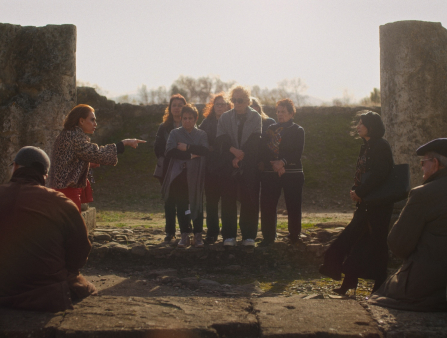
D: That theatricality comes through in that very first scene where we watch as Luisa and Imma yell at each other at an outdoor theater, surrounded by their family in what feels like a staging of a Greek tragedy. When did you know you wanted to introduce the conflict in this way?
GM: I have to speak the truth about how it happened. I actually filmed both of them separately for over a month. I’d written, along with my co-writer [Nico Morabito], a structure for the film using all of my recordings that I’d collected over the years. I always call it a cinematic reality show.
It is actually the same method I used when I worked in TV. The purpose is different. The time you take to make this is different. Why you’re doing it is different—but the method is almost the same. I had this narrative structure. I knew it would happen over Christmas time. I knew that everything would happen during the dinners and lunches. So, as when doing reality shows, I set up and prepared everything. Instead of creating a set and then putting the actors in it, you are actually invading the space discreetly, with lights—we were like 20 people around this space, with two cameras. It was like a cinematic dispositif.
D: To that end, what were the conversations you had with your cinematographer, Kevin Brunet, about the aesthetic you wanted for I Want Her Dead?
GM: You have to adjust to the distance you want to have [with your protagonists]. When I was in the doctor’s office [in GEN_], I used long lenses so that I could be really inside the space without being present in the space, because I was interfering in this very private space. In this case, I used two identical cameras with good lenses. We prepared the space a lot before. It was kind of magical, because I have known these spaces since I was a child. I wasn’t expecting them to be so cinematic.
It was all staged for that. I even chose the costumes for my family, and would choose who would be in the scene and at which location. And I had my accomplice, my mother. She knows exactly what I need. It’s like I’m talking in her ear, telling her what I need her to provoke, sometimes crouching under the table, giving directions. But then, whatever starts and when it takes off, that’s when we’re ready to capture it, documentary-style. I’d use my family—my aunties and my mother—as the middle. I knew right away they would have the role of this Greek chorus.
On the last three days of shooting, I knew that I needed this big scene of confrontation. I come from the theater. I was trained as an actor and a director in theater. It was my first and main language. I was dreaming of having a confrontation, like a Western movie. When we were editing, we had this structure where the purpose of the story was to have the confrontation at the end. But then I had this idea: let’s put that at the beginning. Because it’s setting everything up. It could be a confrontation. Maybe it’s just a metaphor. Or a dream.
I Want Her Dead.
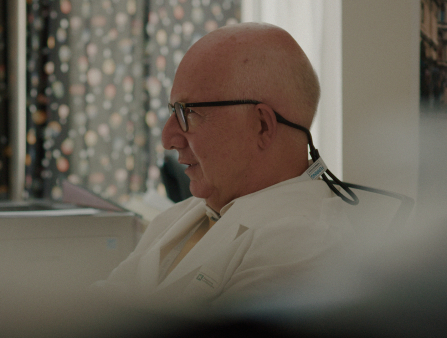
GEN_.
D: It also radically changes the tone of the ending, too, where you leave us, instead, with Luisa perhaps planning something more sinister and more violent before you cut to the credits.
GM: I really wanted to follow this parabola of existential choice, of loneliness, which is very, very bitter. I thought we could start from an explosion, and we then finish with this loneliness. But from the beginning, when I wrote this film, I felt it should be like the day before those true crime stories you read in newspapers happen. We’re always very curious about when the act happens. But what if we were exploring the day before, the weeks before? That’s why the last sequence, with the gun, is like, maybe now is the time when something will happen. But it’s clearly fictional and staged. Because, at the end, we are playing a game.
People ask me, “Are they friends now? What is happening in real life?” But they are not talking to each other. It didn’t change anything. They’re still living in the same building, still hating each other. But I really hope, with the game of representation and catharsis of cinema and theater, that maybe she will never get that far to that irreversible act. I think I saved someone’s life with the film.
D: With this film, just like GEN_ you manage to offer quite a bit of context and expository dialogue without it ever feeling overbearing. How challenging was that, especially in this case, where you needed to catch up audiences on what is such a long-running conflict?
GM: That’s why moving the theater part to the beginning really helped. When we didn’t have that prologue, we really had a hard time explaining who’s who and what the geography of the place was. And then even when we were trying to illustrate the space, it didn’t work. Because I felt we needed to stay indoors a lot. I’m really not the kind of director to do talking heads. But there are still conversations and explanations. In my first films, my editors were like, “You are explaining everything.” Because this is something you do in TV a lot.
Still, in almost every film that I’ve made, there’s also the counterpart to this inner world of talking. For example, in GEN_, nature—the forest, the universe—was this metaphor. You were spending all this time in these conversations in a very small space. And then I really liked opening up to the big drawing, which is the universe. Because that happened even when I was shooting: I was shooting in the microscope, these moments when they’re inseminating an egg, and I would watch that, and think, That’s the cosmos. There’s no difference between the macro and the micro.
I really wanted to follow this parabola of existential choice, of loneliness, which is very, very bitter.
Gianluca Matarrese
D: With I Want Her Dead, you’ve returned to your family, which was the focus of your very first film, Everything Must Go. What have you learned, in the interim, that you brought with you for this new project?
GM: My superpower is actually to understand right away what people will do. I have this power of letting people feel so at ease and so comfortable, like, I’m telling you, but I’m telling you a secret. They tell me everything they will never say to anyone else. Maybe it’s that I’m very curious and use the right words. Or maybe it’s something in the energy, something mystical.
I’m obsessed with stories around me, with characters. I see stories everywhere. Sometimes they’re good, sometimes not. I’m writing compulsively all the time on my phone. My mind goes very fast. I’ve learned over the course of 16 years of therapy that this is actually who I am, and that I should embrace it, make something out of it. I’m doing something about my narcissism, which is not just for myself.
Theater teaches you how to listen, this whole action/reaction thing. For me, when I’m shooting, it’s really like I’m an actor and I’m in the material, even if I’m not filming. But the camera is also a mask. I’m interacting with the camera and choosing what to watch. It’s very organic. And you can see in GEN_, for example, the camera is there; it’s breathing.
Sometimes people think I’m dumb because I’m asking too many questions. But it’s not because I didn’t understand, it’s because I wanted you to say the thing in a way that I needed it said. But that’s pretty much the technique of all documentarians—or anyone working in reality TV.