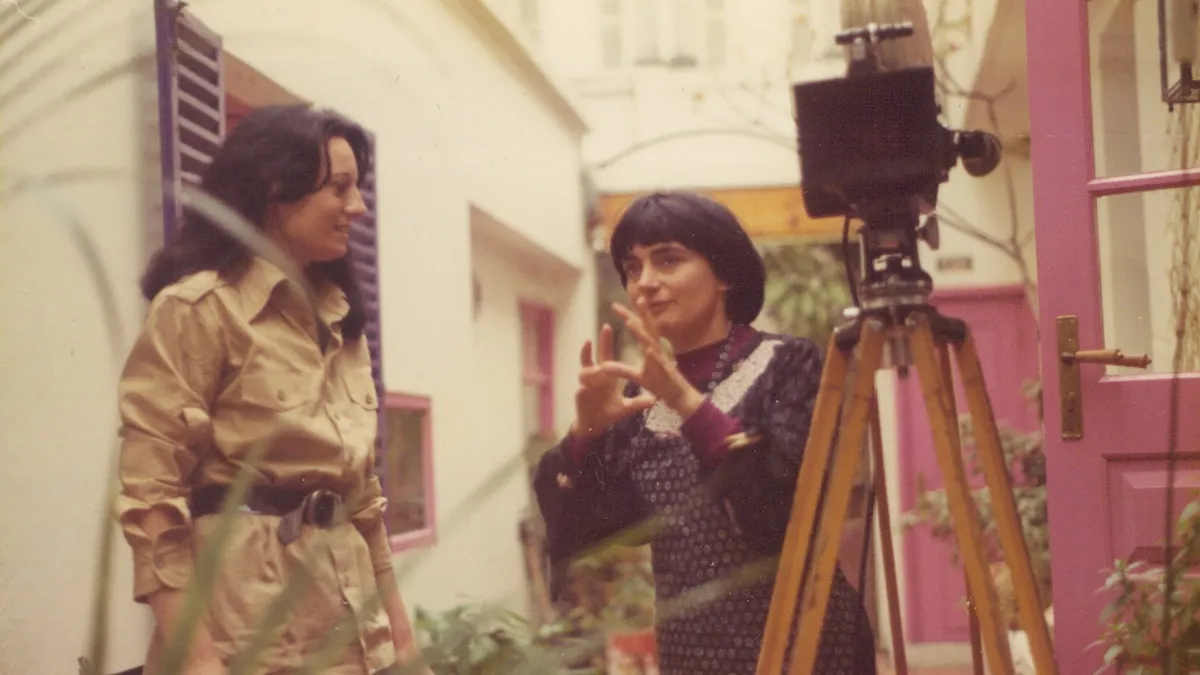


October 23, 1976. Agnès Varda arrives at a villa on the outskirts of Paris. It’s a beautiful fall day, the vines on the terrace are turning gold, and Varda is here to shoot the final scenes of her latest film, One Sings, The Other Doesn’t (1977). Varda strides past crew members setting up lights on the terrace, pausing to sweep a crying child (her son Mathieu, dressed as a cowboy) into her arms. A camera follows as Varda enters the house where her set awaits, a blur of music, excited voices, and colorful creativity, with children running around freely between takes.
As Varda consults with her largely female crew and rallies her actors, a first-person voiceover introduces her filmmaking philosophy. When preparing a shoot, it all appears disorganized and chaotic. “There’s even a certain climate of bedlam or panic,” Varda explains. “I quite like that. I think I know what I want, but I don’t tell my crew everything… I let [my actors] come and go and feel their way into a scene. I too wait, musing, watching everything.”
These compelling images of Varda appear in Women Are Naturally Creative: Agnès Varda (1977), the first in a series of documentaries directed by Katja Raganelli dedicated to women filmmakers. From the late 1970s until the late 1990s, Raganelli and her regular collaborator, the cameraman Konrad Wickler, completed 17 women-in-film portraits, alongside several profiles of women artists working outside of cinema. Made to screen on German and Swiss television, the films covered a who’s who of contemporary women filmmakers—Mai Zetterling, Márta Mészáros, Joan Micklin Silver, Barbara Loden. Others look backward toward the then-forgotten women of early cinema: Alice Guy-Blaché, Dorothy Arzner, Lotte Reiniger.
These films were made in precarious circumstances, often produced on spec with no firm commitment from a broadcaster, their production costs subsidized by other, more lucrative commissions. Nevertheless, despite these financial and practical barriers, Raganelli persisted, producing an extraordinary cache of films that together offer a fascinating, women-centric reframing of a century of cinema.
Almost 50 years after she met Agnès Varda in a villa outside Paris, I meet Katja Raganelli in a hotel lobby in Rotterdam. It’s February 2025, and Raganelli is here for the first international retrospective of her work at International Film Festival Rotterdam. The extensive program consists of a dozen profiles that, in keeping with Raganelli’s abiding interest in film history, are presented alongside films made by the subjects themselves, adding an additional layer of discovery. The overall effect of watching so much Raganelli in succession is revelatory, a dizzying journey through an alternative canon that foregrounds women’s artistic labor.
Although now in her mid-80s, Raganelli appears younger, chicly dressed in a bright suit, her neat rimless glasses the most obvious change differentiating her from the softly spoken figure who occasionally pops up in her films. Born in Split, Croatia, in 1939, Raganelli has lived in Germany since her mid-20s. We speak predominantly in German, although Raganelli sometimes switches unconsciously into English, particularly when recalling conversations with U.S. filmmakers, as if she has stepped sideways into a memory.
As a child in Croatia, Raganelli would queue for hours to see melodramas starring Joan Crawford, Bette Davis, and Katharine Hepburn, struck even at a young age by the elegance, wit, and ruthlessness these women embodied. This early fascination with Hollywood would play a key role in her later career, but the path there was winding.
At university in Belgrade, Raganelli studied literature and philosophy before switching to dramaturgy and direction. A cinephilic teacher introduced her to Sergei Eisenstein and Fritz Lang, and her ambition to direct solidified. She married a German law student and relocated to Bavaria, where in 1967, she enrolled in the newly founded University of Television and Film Munich.
If Raganelli’s aptitude for directing was immediately apparent, so too was the film industry’s sexism. While still a student, she made several fiction shorts that were screened on television. Buoyed by this success, Raganelli wrote a feature screenplay and submitted it to the German public broadcaster ZDF. After receiving enthusiastic feedback, Raganelli waited hopefully for confirmation of funding.
[Konrad Wickler] understood that we were not staging a documentary, but rather drawing inspiration from what the people were doing, that we needed to be connected to the situation. That’s how a really beautiful piece of work came about.
Katja Raganelli
Instead, she discovered that a male director had been assigned to direct her script. “I was shocked,” recalls Raganelli. “They didn’t even tell me. It was just, ‘OK, she wrote the screenplay, but this is the best director we have, a male director. He will do it. He can do it.’”
Stung by this injustice, Raganelli founded her own production company, Diorama Films. “I thought if I produced myself, things might go better, but even this was difficult. I had a limited company, but otherwise nothing.” In 1975, she received a commission from Bavarian public broadcaster Bayerischer Rundfunk (BR) to make a television documentary about a small Bosnian village: Golubic, Once a Year (1975).
It was a life-changing commission. BR assigned Raganelli an experienced cameraman, Konrad Wickler, and she was immediately struck by Wickler’s sensitive and respectful manner; later, she learned he was the only cameraman who had been willing to work with a female director. Shooting in a region with simmering ethnic and religious tensions was challenging, and Raganelli was spied on relentlessly by the authorities. Wickler was a calming presence. Raganelli remembers that
Konrad told me, “Don’t worry, I was working for months in Russia and we were in the same situation. Don’t be surprised if you see they have searched through everything in your apartment. …He was fantastic, he understood that we were not staging a documentary, but rather drawing inspiration from what the people were doing, that we needed to be connected to the situation. That’s how a really beautiful piece of work came about.
The documentary was warmly received, but more importantly, Raganelli had found an ideal collaborator. After the film aired in 1975, she invited Wickler to join Diorama. Somewhat miraculously, this prizewinning cameraman, with a steady job and salary, made the leap. “I was a woman who had nothing but a piece of paper with limited company written on it,” says Raganelli, smiling incredulously at the memory. “He just said, ‘Do you have any plans? Is there something you want to make?’”
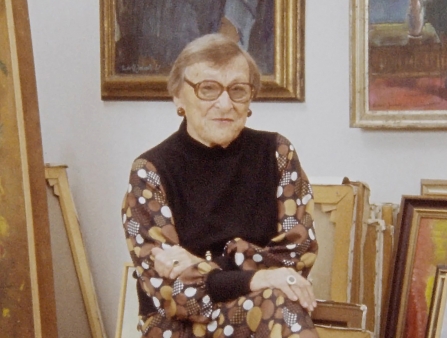
Annot: Portrait of a Painter and a Pacifist.
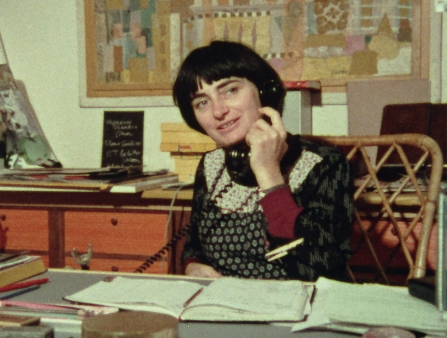
Women Are Naturally Creative: Agnès Varda.
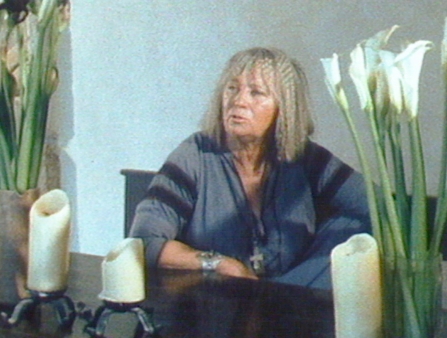
Mai Zetterling in Maybe I Really Am a Sorceress.
Wickler’s question prompted Raganelli to remember an old woman she had recently met in Munich. Anna Ottonie Krigar-Menze, known as Annot, was an artist who had been exiled by the Nazi regime. That summer, the pair spent three months working on Annot: Portrait of a Painter and Pacifist (1976), which would become the first of Raganelli’s profiles of women artists and filmmakers. Piecing the film together using offcuts from reels was painstaking, and the shoot was further slowed by Annot’s insistence on changing into different brightly patterned outfits between takes. However, the resulting documentary is a testament to that dedication, an affectionate profile of the eccentric Annot, who is depicted sitting proudly surrounded by canvases.
In a pleasing piece of foreshadowing, one of Annot’s best-known works is Faces of Working Women, a 1920s cycle of portraits depicting female professionals such as surgeons and lawyers. Raganelli’s film about Annot would kick off her own cinematic cycle centered on working women, albeit with a focus on artistic labor. After selling Annot to BR for a small fee—enough to cover lab and equipment costs—Raganelli suggested Varda as their next subject, having heard through friends that the “mother of the French New Wave” was midway through shooting One Sings, the Other Doesn’t (1977).
Varda allowed Raganelli and Wickler to visit her set, but she proved a challenging interviewee. Still finding her feet, Raganelli asked a friend, Nouvelle Vague expert Frieda Grafe, to interview Varda, but that plan soon went off the rails. “Frieda had done a lot of analysis that disturbed Agnès,” Raganelli explains. “She didn’t agree with Frieda’s interpretations. We got through the day, and then she said, ‘I am tired, this is over. I wish you a good trip to Munich.’” Crestfallen, Grafe boarded a train home, but Raganelli stayed behind with Wickler.
When Raganelli returned to Varda’s apartment to say goodbye, she invited Raganelli in for coffee. Then, somehow, Varda’s defenses came down. “She opened up in the kitchen. And we were able to capture her as a woman. There was nothing theoretical about it.” Raganelli remembers. “In the movie, you can see exactly that break, the moment where she opens up to us and trusts us.”
There is a palpable moment in Women Are Naturally Creative: Agnès Varda in which Varda visibly relaxes. In her kitchen, Varda sits down and starts addressing the camera directly. “You know, Katja, I really like working in the kitchen,” she says, smiling wistfully. “First, because it really is the heart of the house. I also think it’s something about women. We can’t say our professional life is here and the kitchen is over there. …We can conduct business in the kitchen just as we can allow children in the office.”
Many of the women filmmakers Raganelli interviews also talk about the exhausting process of fundraising, and the difficulty of persuading overwhelmingly male gatekeepers to support projects authored by and centering women.
This scene with Varda was a breakthrough. By speaking to her like a person, rather than an intellectual, Raganelli had captured an unusually candid moment. Her subsequent profiles build on the blueprint established by the Varda film. Footage of women at work (Varda in her editing suite, Márta Mészáros directing Delphine Seyrig on set, Barbara Loden teaching an acting class) are interspersed with images of their domestic lives (Varda playing with her son, Mészáros putting the finishing design touches to her new apartment, Loden sitting at the dining room table with her husband, Elia Kazan).
This vérité footage, beautifully framed by Wickler, is interspersed with lengthy interviews in which these women talk about both professional and personal subjects, from their artistic philosophies and filmmaking inspirations, to the difficulties of balancing work and family. Often these interviews take place in the women’s homes, at kitchen tables or in messy home offices, with the ephemera of domestic life (photographs, children’s drawings, handbags) present in the frame, the domestic and the professional blurring aesthetically as well as thematically. Building on the feminist adage that “the personal is political,” Raganelli depicts her subjects as three-dimensional women—as artists and professionals, but also as women, wives, mothers, and friends.
Raganelli had stepped through the looking glass, into an alternative world populated by women filmmakers. “I wanted to capture every woman I could reach for the next generation,” Raganelli tells me, but although she believed passionately in her subject matter, persuading commissioners to support her was a struggle. Raganelli and Wickler became spontaneous, willing to load up their Volvo Combi at a moment’s notice if they heard a filmmaker was shooting.
Raganelli was often able to retrospectively persuade a commissioner to pick up a project after they had already shot most of the footage, but sometimes even her formidable powers of persuasion fell short. Her archive includes footage for several tantalizing unfinished projects, including profiles of Joan Tewkesbury, Joan Darling, Astrid Henning-Jensen, and Martha Coolidge. Despite her sharp eye for identifying filmmakers whose work would later become crucial to the feminist canon, and her consistency in delivering engaging profiles of these women over the years, Raganelli struggled to secure the consistent financing needed to move beyond this risky way of working.
Many of the women filmmakers Raganelli interviews also talk about the exhausting process of fundraising, and the difficulty of persuading overwhelmingly male gatekeepers to support projects authored by and centering women. In Joan Micklin Silver: Encounters With the New York Director (1983), the eponymous filmmaker describes how even after the breakout success of her independent debut feature Hester Street (1975)—which grossed $5 million at the box office on a $365,000 budget and received an Oscar nomination for lead actor Carol Kane—finding backers for her next film was difficult. “People have subsequently said to me, ‘You know, if any man had made Hester Street, he would have had a three-picture deal with Paramount or Warners,’” Micklin Silver wearily tells Raganelli.
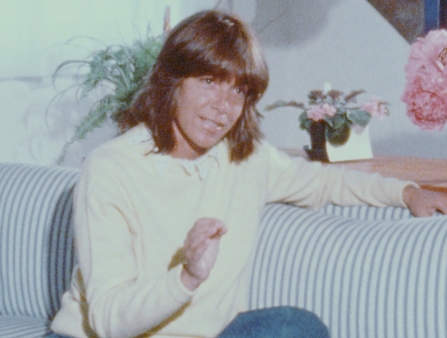
Joan Tewkesbury.
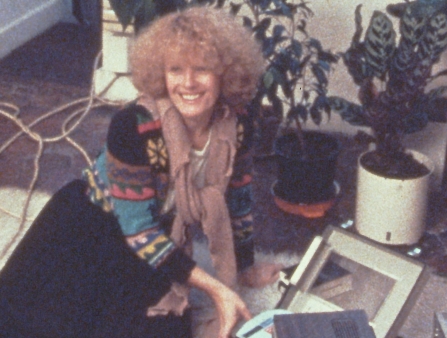
Portrait of Actress Delphine Seyrig.
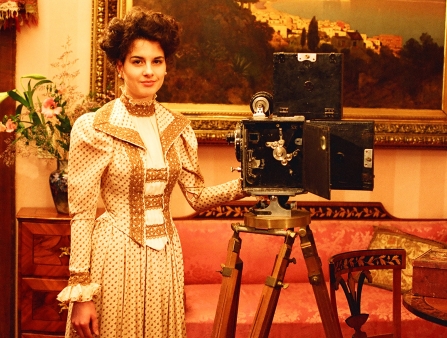
Alice Guy-Blaché.
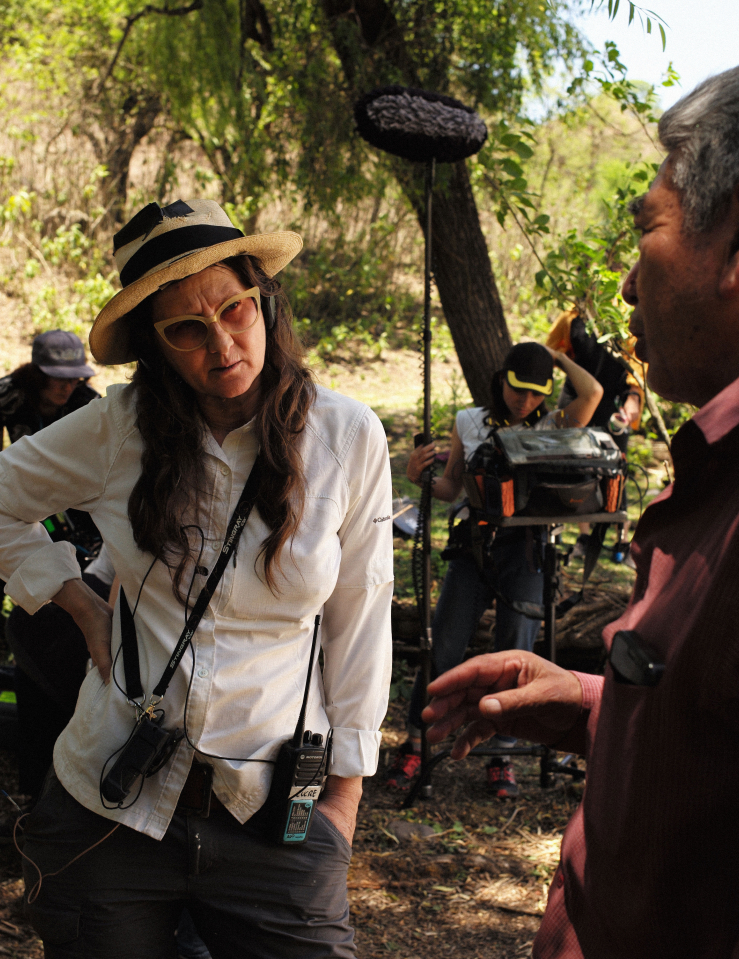
Within the context of her own career, Raganelli seems to have experienced similar frustrations, forced to start almost from the beginning with each of her profiles, despite a growing body of work. Limited resources led Raganelli and Wickler to develop a lean, efficient approach. “We were ‘rucksack producers,’” remembers Raganelli. “I always had a tape recorder in my rucksack and a camera.” Raganelli would take responsibility for research, directing, and writing, while Wickler took on camera, lighting, and producing, meaning that they often only needed an additional sound person to start shooting.
This lightweight, unobtrusive style was the result of necessity, but it also facilitated an informal, personal atmosphere, which helped Raganelli and Wickler win their protagonists’ trust. In 1980, when Raganelli interviewed Micklin Silver during a trip to New York subsidized by a commission about the city’s culinary scene, Micklin Silver told them that Barbara Loden was teaching acting at the Lincoln Center. When Raganelli and Wickler turned up to film Loden at work, she tentatively agreed as a test run. “We were so quiet, we didn’t interfere with one word,” says Raganelli. Struck by the team’s discretion, Loden agreed to be interviewed, and over the next week, Raganelli and Wickler followed her as she went to dance classes, taught acting, and spent time with her family.
What Raganelli didn’t know was that they had met Loden, who was secretly suffering from cancer, in the final weeks of her life. After a period of shooting, Raganelli and Wickler traveled to Hollywood for research, before returning to New York. “Her apartment was empty, everything was boxed,” Raganelli remembers. “We walked through the streets of New York, and she was very sad. She kissed me and cried and gave me many photos, the originals from magazines, from when she was famous.” Four weeks later, Elia Kazan informed Raganelli that Loden had died of cancer.
Unsurprisingly given this context, I Am Wanda: Portrait of Actor and Director Barbara Loden (1989) is Raganelli’s most emotional piece of work. Haunted by the knowledge that Loden is near death, the film becomes a last testimony. In a letter read by the narrator at the start of the film, Elia Kazan describes how Loden saw the film as “a very serious chance to complete her life. …How she did those dancing scenes in front of the camera I’ll never know. It was heroic of her, but she knew that this was her last chance to make a film about her life, so she did it.” Now that Wanda is widely accepted as a foundational work of U.S. independent cinema, the fact that Raganelli anticipated its importance and captured this footage of Loden discussing her life and career in the final months of her life feels miraculous.
Rather than accepting the compromised opportunities that this industry would offer her, Raganelli chose to make the work she believed in, any way she could, even if that meant taking on the personal risk, the constant multitasking, and the shoestring budgets of a “rucksack producer.”
Raganelli’s films are defined by not only her taste (and thus her ability to preempt the future importance of artists such as Loden) but also her complete conviction in the importance of documenting women’s creative labor. Between 1969 and 1997, including her early student fiction shorts, Raganelli directed 45 completed films. Around half of those covered feminist topics, including women film directors and actors, as well as a handful of other documentaries centering women in the arts, such as female photographers and the women of ragtime and blues. To subsidize the production of these passion-led projects, Raganelli took more reliable television commissions, such as directing episodes for BR’s A la carte, a series about restaurants and food culture. She also made several films about male filmmakers, most notably Jean-Luc Godard, which did not receive the same resistance from commissioners as her female-focused work on the same subject.
Speaking to Raganelli, it seems clear that for her, these other commissions were secondary to the true mission of her career: creating a living archive that would record and preserve the work of other women, who, like Raganelli, were fighting for space in an industry often actively hostile to women. Her films also feel so radically different to our current commercial boom in biographical documentary making partly due to Raganelli’s personal experience of industry sexism and rejection. Raganelli’s dream of fiction filmmaker was derailed by her early realization that women directors were not being taken seriously in this male-dominated world. Rather than accepting the compromised opportunities that this industry would offer her, Raganelli chose to make the work she believed in, any way she could, even if that meant taking on the personal risk, the constant multitasking, and the shoestring budgets of a “rucksack producer.”
It is always tempting to look for the artist in their work, and given that Raganelli, herself a female filmmaker, dedicated her life to documenting other female filmmakers, it is logical that her work sometimes reflects her concerns back to us. A running trope is the presence of romantic partners, particularly husbands, and the complicated relationships between these men and the women who live and work with them. Raganelli captured intriguing scenes between Loden and Kazan, Varda and Jacques Demy, and Micklin Silver and producer husband Raphael D. Silver, as well as an explosive on-set argument between Mészáros and her husband and co-writer Jan Nowicki.
In the 1980s, Raganelli’s own working relationship with Wickler evolved into a romance, so it makes sense that she would be fascinated by how her peers were navigating the blur between their professional and romantic lives. In the present day, Raganelli describes her relationship with Wickler as harmonious. “He let me work completely alone, but we talked at length beforehand about how we would approach the women,” she tells me. “Sometimes we really only communicated through our eyes. …We had a body language, we understood each other.” Although there is no question that Raganelli was the sole director of her films, almost all are credited to both Wickler and Raganelli, on her insistence.
After Wickler’s death in 2011, Raganelli stopped shooting, but she is keen to emphasize that she is still working. She is currently writing a book, drawing on the research she has gathered over the years, and she also hopes to complete some of the unfinished profiles that lie in her archive. She tells me that she has been emailing Joan Tewkesbury, now aged 89, and that there is a scheduled Zoom call that Raganelli intends to film.
That Raganelli remains, even at this late phase in her career, committed to finishing her film portraits, speaks to her indefatigable dedication. Although attitudes toward women filmmakers have shifted since Raganelli first began making her portraits in the late 1970s, her films still feel fresh because they capture experiences that remain widespread across the film industry and wider cultural world.
The wider meta-story behind these films, of Raganelli’s own fight to make work that she knew would have wider importance, will also doubtless resonate with today’s filmmakers who seek to make films that address and represent marginalized perspectives. It is a struggle that has been present throughout the history of cinema, and which we are still in the process of addressing. It’s partly thanks to Raganelli—and her commitment to preserving cinema’s past—that we can trace the way in which this history continues to repeat and reproduce itself, all the way through to our own current, turbulent, political moment.
This piece was first published in Documentary’s Summer 2025 issue.